





How to Choose the Perfect Bath Towel Set?

You have probably been burned before. Soft in the shop, rough at home. It is one of those small frustrations that nobody really talks about but almost everyone has experienced.
The towel industry is not built around your bathroom. It is built around a five-second touch test in a shop aisle. Once you understand that, the whole thing makes more sense.
Fibre First. Always.
There is one thing that separates a towel worth buying from one that is not and it is the cotton.
Long-staple cotton has longer fibres. They spin tighter. The towel absorbs faster, lasts longer, and gets softer the more you wash it. That last part matters. A towel that improves with use is a fundamentally different product from one that deteriorates.
Short-staple cotton starts okay. Within months, it pills, thins out, and loses whatever softness it had.
When you look at bath towel sets, check the label for "long-staple" or "combed cotton." No mention of fibre quality at all? Walk away. That silence is not an accident.

GSM: Stop Treating It Like a Quality Score
Higher GSM does not mean a better towel. It means a heavier towel. There is a difference.
300–400 GSM dries fast, feels thin. Good for the gym or travel. Not what most people want at home after a shower.
500–600 GSM is where most households should land. Absorbent, dries reasonably fast, holds up well through regular washing.
700+ GSM is very thick and plush. It is also slow to dry. In a warm, dry climate with a tumble dryer - great. In a small humid bathroom, you will have a permanently damp, smelly towel within weeks.
Nobody tells you that last part in the shop.
Why Does the Weave Actually Matters?
Most towels you pick up in a high street shop use terry loop construction - those small surface loops. Terry is fine. Functional. Nothing more.
Japanese bath towels are often built differently. Gauze weaves. Layered constructions. The idea is that water passes through the fabric rather than sitting inside it. The towel dries faster between uses, smells fresher, and holds its softness through daily use without falling apart.
This is not a marketing angle. It comes from Japan's bathing culture - daily use, high frequency, real expectations. The towel had to earn its keep every single day. That context produced a different kind of product.
Most mass-market bath towel sets were designed around a display shelf. That is the difference.

The Softness That Is Not Really There
Walk into any department store and pick up a towel. Incredibly soft, right?
Wash it four times. That softness is gone.
What happened is simple. Most bath towel sets are treated with chemical softeners before packaging. The coating feels luxurious. It also washes out, usually within three to five cycles, leaving you with whatever the actual fibre quality is underneath - which in budget towels is often disappointingly rough.
Quality cotton does not need that treatment. It earns softness through the fibre itself, and the softness builds rather than disappears.
Wash any new towel before first use. One wash. You will find out very quickly whether what you bought was genuine or a coating.
How Many Towels Do Two People Actually Need?
Four bath towels. That is it.
Two in use, two clean in the cupboard. Swap them over regularly. Add four hand towels and four face cloths and that is a complete household set.
People accumulate towels - gifts, old sets that never got thrown out, spares that never get used. Towels sitting folded for weeks in a cupboard absorb ambient moisture and go stale. Using fewer towels, rotated properly, is cleaner and more practical than a full shelf of towels you rarely touch.
What Imabari Actually Means
Imabari is a region in Ehime Prefecture in Japan. It has been making textiles for over 120 years. The certification exists because the name started getting used loosely - so an independent testing standard was created to protect it.
To carry the Imabari mark, a towel has to pass tested benchmarks for absorbency, colour durability, and longevity. Not claimed by the brand. Tested independently.
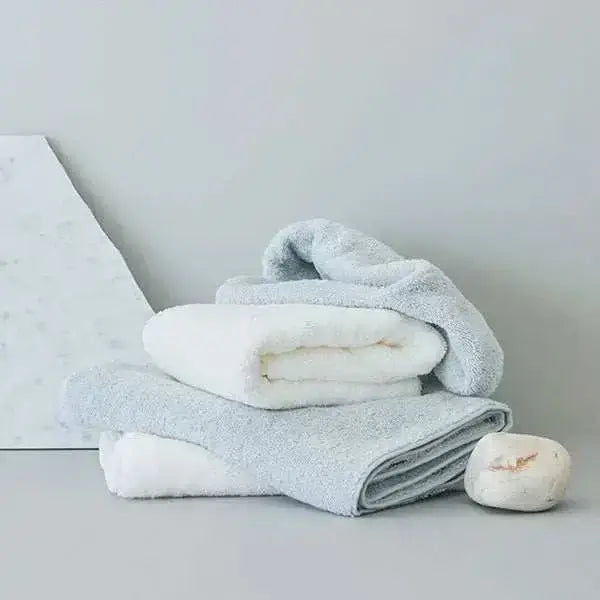
Our HIKOTA Luxe Absorbent Towel is made in Imabari. Long-staple cotton, no chemical softeners, built for the kind of daily use that reveals what a towel is actually made of. It is the bath towel set we would buy ourselves and do.
Before You Buy, Check These Things
The care label. If keeping the towel soft requires a specific wash temperature or special detergent, that softness is not in the fibre.
The brand's transparency. Can they tell you where the cotton comes from and how the towel is made? If not, there is usually a reason.
Your bathroom. High humidity, no dryer? Do not buy anything above 600 GSM. You will regret it.
Your skin. Sensitive? Stick to pure long-staple cotton and avoid synthetic blends entirely.
And wash the thing before you use it. Every time, without exception.
What It Comes Down To
Cheap bath towel sets are designed to feel good once - in the shop. Good ones are designed to perform for years. The difference is usually in the cotton and whether a brand was honest about how they made what they sold.
Japanese bath towels - particularly those made to the Imabari standard - were built around daily use in a culture that takes bathing seriously. That is where we started when we built our range. Performance first, everything else second.
If you want a straight answer on which towel suits your home, just ask us. We would rather help you get it right than have you guess.
Frequently Asked Questions
Q1. What actually matters when buying bath towel sets?
Ans. The cotton. Specifically, whether it is long-staple or combed. That determines how the towel ages. Everything else - GSM, weave, finish - layers on top of the fibre quality. Get the fibre right and the rest follows.
Q2. What is different about Japanese bath towels?
Ans. Two things: the weave construction and the certification standard. Japanese towels - Imabari ones in particular - often use weaves that dry faster than standard terry loops. And the Imabari certification is independently tested, not self-declared. That combination is hard to find elsewhere.
Q3. Which GSM should I buy for home use?
Ans. 500 to 600 for most homes. Above 700 only if you have a tumble dryer or a dry climate. The number is a starting point, not a guarantee of quality.
Q4. How many towels do I need?
Ans. Four bath towels for two people. Rotate them. More than that tends to mean towels sitting unused long enough to go stale.
Q5. Why did my new towels go rough after washing?
Ans. Chemical softeners applied during manufacturing. They wash out. The towel underneath is the real product. Long-staple cotton towels get softer with washing - that is how you know the quality is in the fibre and not applied over it.
Q6. Are Japanese towels worth the price?
Ans. For daily use, yes. They last longer, stay softer without treatments, and dry faster. The cost per wash over two to three years is usually lower than cheaper alternatives that need replacing within a year.


