






Curly Hair Products That Actually Work with Japanese Hair Care Secrets

Curly hair is not hard to manage - it's just been managed with the wrong products for too long. Most curl formulas coat the strand, fake moisture, and create build-up that weakens your hair over time. Japanese hair care products take a different route entirely: gentle cleansing, strand-penetrating ingredients, and scalp care that builds real, lasting curl health from the root up. Here's what that actually looks like in practice.
Why Curly Hair Gets the Short End of the Product Shelf
Curly hair has a real structural challenge straight hair doesn't deal with. The natural coil and bend in each strand means the scalp's oils can't physically travel down the full length = they get stopped at the curves.
Most products respond to this by adding more. And more. Here's what that actually looks like in practice:
- Heavy creams that sit on top but don't hydrate from within
- Silicones that fake softness for a day but seal nothing in long-term
- Hold gels that define curls temporarily, then leave a crunch you have to "scrunch out"
- Gradual build-up that clogs the scalp and weakens new growth
- A hard shampoo to strip it all - which restarts the dryness cycle
It's exhausting. And it never fully works because it addresses symptoms, not causes.
The best Japanese hair care approach breaks this cycle - treating the scalp and strand as one connected system, not two problems you manage separately.
What Makes Japanese Hair Care Actually Work for Curly Hair
1. It Starts With How You Wash (Not What You Style With)
Most curly-haired people don't realize their shampoo is quietly undoing everything else. Sulfates strip everything, including the natural oils curly hair already barely has enough of.
Japanese hair care products almost universally swap sulfates for amino acid-based cleansers. For curls, here's why that swap matters:
- Amino acids match your scalp's natural pH, no dry-and-overcompensate spiral
- They lift dirt and product residue without stripping the moisture barrier
- Scalp stays balanced, not overcorrecting with excess oil at the roots
- Hair comes out clean and soft, not "squeaky" (which for curly hair is a red flag, not a goal)
2. The Ingredients Go Inside the Strand - Not Just On Top
Most Western curl products work at the surface. Japanese formulas are designed to penetrate.
Key ingredients to look for:
- Fermented rice enzymes: Fermentation shrinks the molecules so they can enter the hair shaft. Real repair at the curl bond, where bends and coils create the most breakage risk
- Tsubaki (camellia) oil: Lightweight, rich in oleic acid, small enough to enter the hair cortex. Seals moisture inside the strand rather than coating the outside — exactly what frizzy curls need
- Thalasso (marine botanical) extracts: Sea minerals that directly restore elasticity. Lose elasticity and curls go flat or shapeless no matter what you put on them
- Hydrolyzed proteins: Fill the structural weak points along the curl, especially at the bends where breakage is most common
3. Scalp Health Isn't Optional - It's the Foundation
Most curl routines completely ignore the scalp. This is probably the single biggest reason results stall. Japanese hair care treats the scalp like skin because it is skin.
When the scalp is congested, dry, or irritated:
- New hair grows in weaker from the start
- Natural oils can't flow freely down the strand
- Curls at the root look flat regardless of how the lengths are styled
Fix the scalp first. Everything else gets easier.
A Three-Step Curly Hair Routine Using Japanese Hair Care Products
Three steps. That's genuinely all you need when each step is the right one for how curly hair actually behaves.
Step 1: Cleanse Without Stripping
Focus shampoo on the scalp, not the lengths. Let the rinse carry the cleanser through the ends naturally.
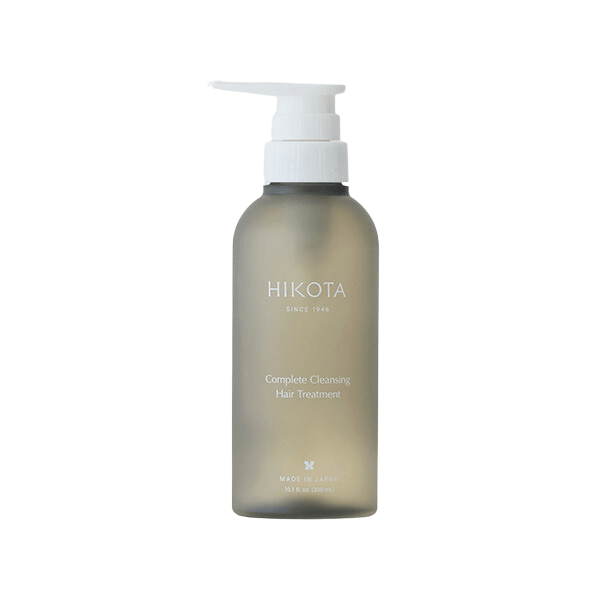
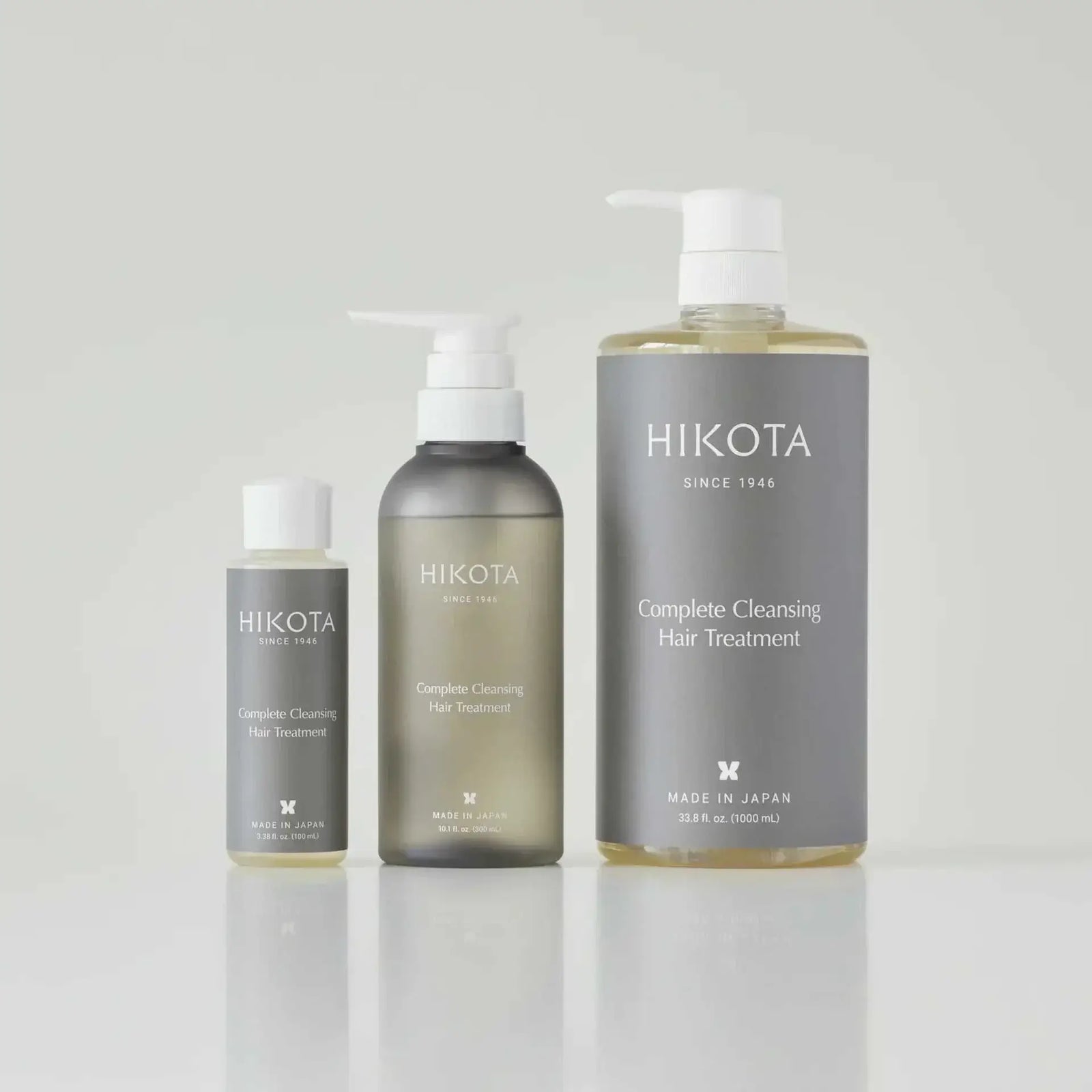
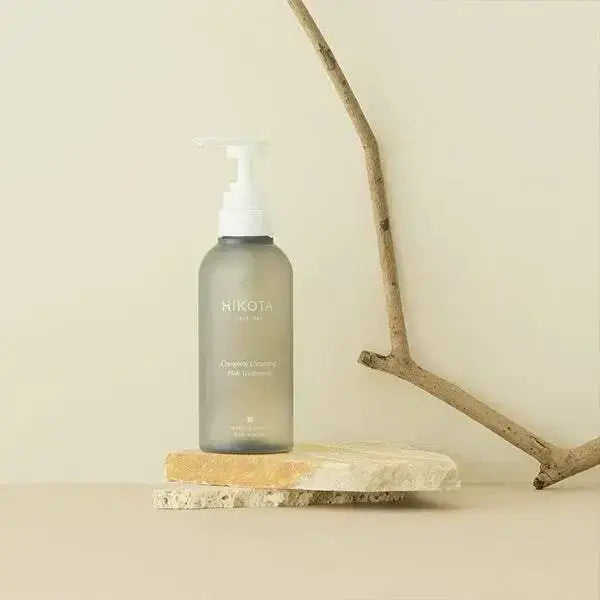
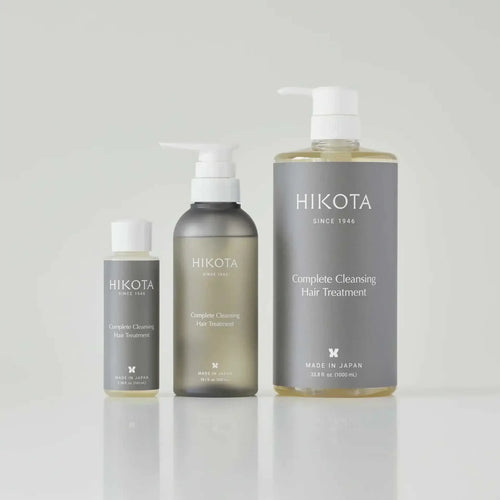
The HIKOTA Complete Cleansing Hair Treatment is built for exactly this:
- Sulfate-free amino acid formula made in Japan
- Fermented rice enzymes + botanical herb extracts in every wash
- Cleans the scalp deeply without triggering post-wash frizz
- Includes a pre-wash step, apply a small amount before wetting, which protects the curl structure against the physical stress of shampooing
That pre-wash step sounds small until you skip it and immediately notice the difference.
Step 2: Treat at the Damp Stage
Damp hair - not soaking, not towel-dried - absorbs treatment best. This is your window. Use it.
The RUHAKU Thalasso Scalp & Hair Treatment was built for this stage:
- Okinawan marine botanicals + plant oils working directly on curl elasticity
- Thalasso minerals replenish what heat, humidity, and hard water keep pulling out
- Apply mid-lengths to ends, leave 2–3 minutes, rinse cool to seal the cuticle
- Results compound over time, curls hold their shape longer and need less styling help

Step 3: Seal Before the Hair Dries
This is the most skipped step in curl care. It's also, genuinely, why the definition disappears for so many people before noon.
While hair is still damp, seal everything you just added:
- The HIKOTA Ion Lustre Emulsion uses mineral-ionised water from the Japanese Alps to smooth the hair cuticle
- Completely silicone-free, smooths without coating, no build-up, no false softness
- 1–2 pumps through the lengths; don't add more hoping for better results
- Curls stay soft and defined - no crunch, no stiffness, no mid-afternoon frizz
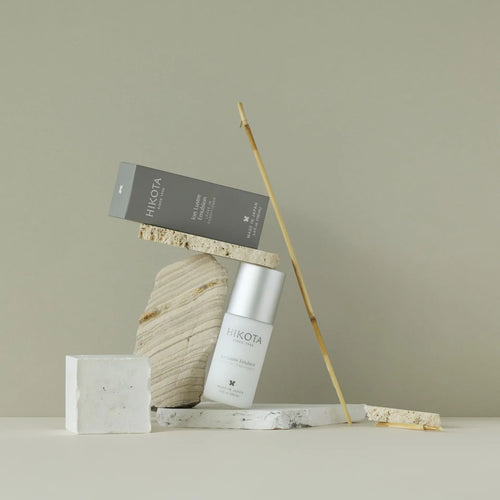
New to Japanese hair care products? The HIKOTA Nourishing Hair Ritual Set pulls Steps 1 and 3 into one coordinated system - one of the easiest Japanese haircare sets for curly beginners who want structure without overthinking every product decision.
The Honest Bottom Line
Your curls don't need more product. They need a better product - chosen with some understanding of what curly hair actually needs at the strand level.
Japanese hair care products are built on that understanding. Gentle cleansing that doesn't strip. Ingredients that enter the strand, not just coat it. Scalp care that makes everything above it grow stronger.
It's a shift in thinking more than anything else. But the results are real.
Browse the full Japanese Hair Care collection at SOWAKA and build the routine your curls have actually been waiting for.
Frequently Asked Questions
Q1. Are Japanese hair care products actually good for curly and coily hair types?
Ans. Yes and genuinely so, not just as a claim. They use amino acid cleansers, lightweight penetrating oils like tsubaki, and moisture-first formulas that work with curly hair's structure rather than fighting it. The scalp-health focus is especially useful for coily textures, which have the hardest time distributing natural oils down the strand.
Q2. Which Japanese ingredients help the most with frizz on curly hair?
Ans. Tsubaki (camellia) oil is the one to start with - it seals moisture from inside the strand rather than coating the outside, which is the actual mechanism behind frizz control. Fermented rice enzymes work on the cuticle layer directly; a raised or damaged cuticle is what physically causes frizz, so repairing it matters more than any styling product. Hydrolyzed proteins round things out by strengthening the weak points along the curl, lowering the porosity that lets humidity in and undoes everything.
Q3. How often should I use a Japanese hair treatment with curly hair?
Ans. Two to three times a week is a solid starting point for most curl types. Because Japanese formulas skip sulfates and heavy silicones, there's no real risk of overdoing it - these aren't the kind of products that punish you for using them consistently. That said, frequency matters less than regularity. Same steps, same products, done reliably, will outperform an inconsistent routine every time.
Q4. What should I look for in the best Japanese hair care for curly hair?
Ans. Start with the formula basics - sulfate-free cleanser is non-negotiable for curls, and a silicone-free treatment or leave-in means you're not just layering fake softness on top of dryness. From there, look for an amino acid or fermented ingredient base, a lightweight penetrating oil like tsubaki or camellia, and minimal synthetic fragrance. Heavy fragrance loading in a formula is often a sign the actives aren't doing enough on their own.
Q5. Are Japanese haircare kits worth it for curly hair beginners?
Ans. Yes, and probably underrated for this specifically. Japanese haircare kits are built so the products inside work together - same formulation philosophy, compatible textures, designed to layer in sequence. For curly beginners still figuring out what their hair responds to, that compatibility removes a lot of guesswork upfront.
Q6. Can Japanese haircare sets fully replace a Western curl routine?
Ans. For most people, yes. It handles cleanse, treat, and seal as one cohesive system. You'll likely use less product overall and see more consistent results. If your current routine involves five or six products and you're still not satisfied with your curls, switching to a structured Japanese haircare set is genuinely worth trying.


